Pre-Shipment Quality Inspection in China: A Complete Guide for Importers (2026)

Pre-shipment quality inspection in China is the process of verifying that goods are manufactured correctly, packed to spec, and match your purchase order — before they leave the factory and before you pay the final balance. A qualified third-party inspector visits the factory, tests a sample of units against your requirements, and delivers a written report, typically within 24–48 hours.
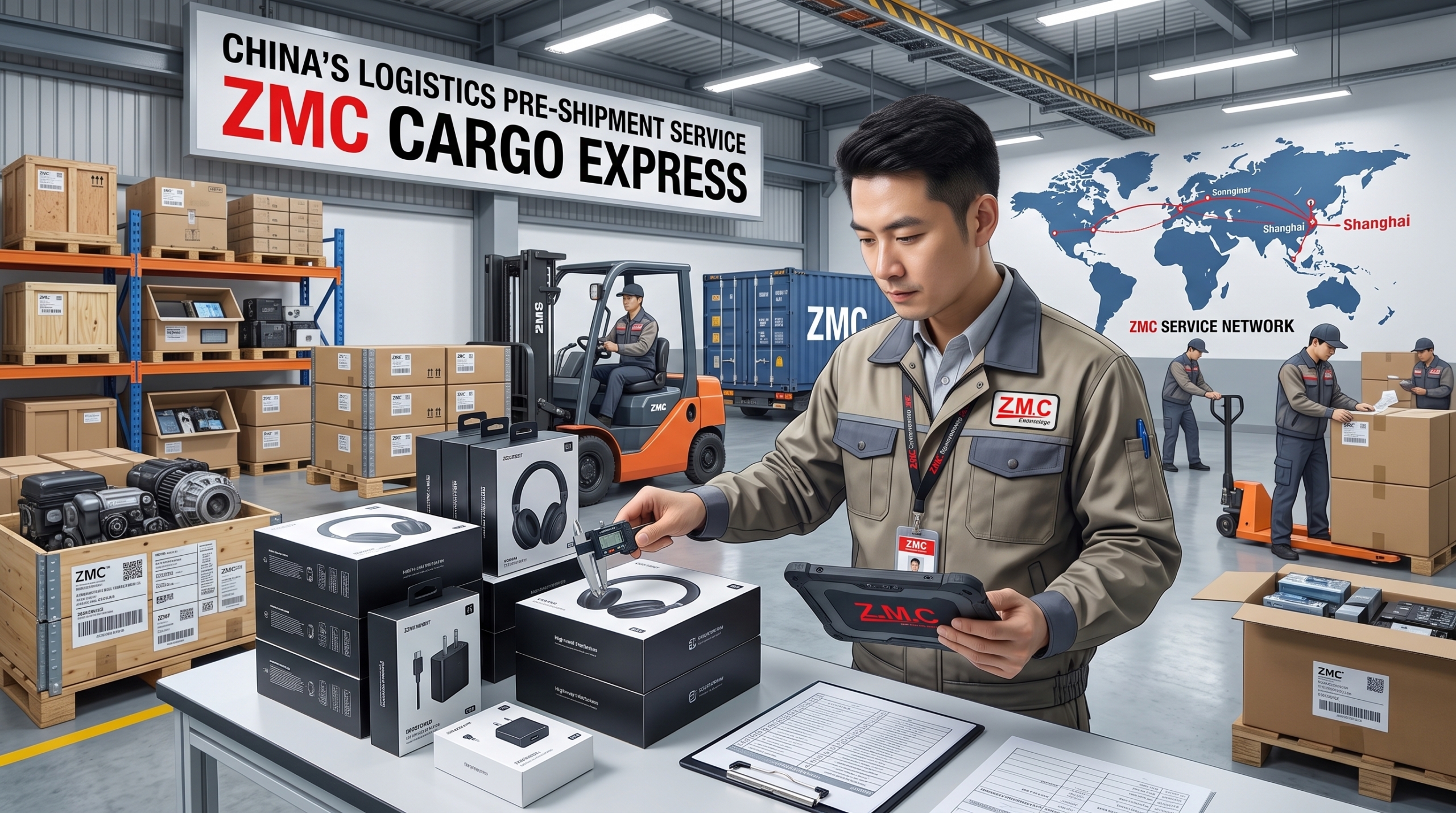
Pre-Shipment Quality Inspection in China

For importers sourcing goods from Chinese manufacturers, a pre-shipment inspection (PSI) is the single most cost-effective risk control available. At $100–$400 per inspector-day, it costs a fraction of what a rejected shipment, customs hold, or product recall will set you back.

This guide covers everything you need to know: what inspectors actually check, how AQL sampling works, what a PSI costs in 2026, when to schedule it, and — critically — how inspection integrates with your freight forwarding and customs clearance when shipping to the UAE or Iraq.


What Is a Pre-Shipment Quality Inspection?

A pre-shipment quality inspection is an independent, third-party audit of a production batch conducted at the supplier’s factory before goods are loaded and shipped. The inspection is performed when at least 80% of the goods are produced and 80% are packed — giving the inspector access to a representative sample of the actual shipment.

The inspector is not employed by the factory or the importer. They follow a standardised checklist aligned with the buyer’s purchase order and internationally recognised quality standards, most commonly ISO 2859-1. After the inspection, they produce a detailed report with photographs, measurements, defect logs, and a clear pass or fail verdict.

PSI is distinct from three other types of quality control:

Initial Production Check (IPC)
Conducted at the very start of production to verify materials and setup before the run begins.
During Production Inspection (DUPRO)
A mid-production audit when roughly 20–30% of goods are complete.
Container Loading Check (CLC)
Supervision of goods being loaded into the container, confirming quantity, condition, and seal numbers.

PSI is the most widely used of the four because it’s the last checkpoint before goods leave China and become your legal responsibility.


Why Pre-Shipment Inspection Matters for Importers

Importers sourcing from China face a structural information gap: you’re ordering from a factory thousands of kilometres away, often based on samples and photographs, with limited visibility into the actual production run.

That gap is where problems enter the supply chain. A 2024 study by a major QC platform found that over 30% of unaudited shipments from Chinese manufacturers contained defects above the acceptable threshold — ranging from cosmetic flaws to functional failures and mislabelled quantities.

The financial consequences compound quickly. Consider a retailer who orders 3,000 units at $12 each ($36,000 order value). If 15% of units arrive defective, that’s 450 units that cannot be sold. Add returns processing, customer refunds, replacement sourcing, and the cost of a second shipment, and a single missed inspection can generate $10,000+ in losses — against an inspection cost of $250–$350.

For importers shipping from China to UAE or shipping from China to Iraq via Dubai, the stakes are higher still: UAE and Iraqi customs authorities can reject non-conforming goods at the port of entry, leaving you with goods in a bonded warehouse, accruing demurrage charges, and no clear path forward.

PSI prevents this by catching issues while the goods are still at the factory, where rework is cheap and time is available.


What Does an Inspector Check During a Pre-Shipment Inspection?

A standard PSI covers eight core areas. The specific checklist is customised to the product, but these categories are universal:

1

Quantity VerificationThe inspector counts the total number of units produced and packed, verifying it matches the purchase order. Shortfalls, overages, and split-lot issues are flagged here.

2

Product SpecificationsDimensions, weight, materials, colour, and finish are measured and compared against the approved sample or specification sheet. Any deviation from the approved sample is logged with photographs.

3

Workmanship and AppearanceEach sampled unit is examined for defects in manufacturing quality: poor stitching, uneven paint, surface scratches, assembly misalignment, and similar issues. Defects are classified as critical, major, or minor.

4

Functional TestingWhere applicable, the inspector tests whether the product functions as intended. Electronics are powered on. Moving parts are operated. Garments are stress-tested at seams. Safety mechanisms are triggered.

5

Packaging and LabellingCarton strength, inner packaging, product labelling (including barcodes, SKU numbers, country of origin, and compliance markings) are all checked. Incorrect labelling is a common cause of customs delays.

6

Safety and ComplianceThe inspector checks for required compliance marks (CE, RoHS, FCC, etc.) and flags products that appear to fall outside regulatory requirements. Note: PSI does not replace lab testing for chemical compliance or product certification — those are separate processes.

7

AQL SamplingThe inspector doesn’t check every unit — they work from a statistically valid sample. The AQL (Acceptable Quality Limit) framework determines how many units to inspect and how many defects trigger a fail verdict.

8

Container Loading Supervision (Optional Add-On)Some buyers combine PSI with a container loading check, ensuring inspected goods are the same ones loaded and that the container is sealed correctly.

How AQL Sampling Works: The Standard Explained

AQL (Acceptable Quality Limit) is the backbone of pre-shipment inspection. It answers one practical question: how many defective units in a sample are acceptable before the whole batch fails?

The framework is defined by ISO 2859-1, the international standard for sampling inspection by attributes. Here’s how it works in practice:

Step 1: Determine your batch size. If your order is for 3,000 units, your batch size is 3,000.

Step 2: Choose your inspection level. The most common is General Inspection Level II. For smaller orders or high-risk products, Level I reduces the sample size. For critical goods, Level III increases it.

Step 3: Identify the AQL for each defect type. Defects are classified into three tiers:

Defect Type AQL Level Definition Example — 3,000 units
Critical AQL 0 — Zero tolerance Safety hazards or legal violations Any single critical defect fails the batch
Major AQL 2.5 Failures affecting function or clearly visible Inspect 125 units; fail at 11+ defects
Minor AQL 4.0 Cosmetic issues unlikely to affect purchase Inspect 125 units; fail at 15+ defects

Step 4: Consult the sampling table. For a batch of 3,000 units at General Level II, the inspector examines 125 units. At AQL 2.5 for major defects, the batch passes if 10 or fewer defective units are found, and fails at 11 or more.

Why AQL matters for your negotiations: You should specify your AQL thresholds in your purchase order before production begins. If your supplier knows your acceptance criteria upfront, they can’t dispute the inspector’s verdict. Failing to agree on AQL in advance is one of the most common mistakes importers make — and one of the most expensive.


What Does Pre-Shipment Inspection Cost in China?

Pre-shipment inspection in China is priced on a per-man-day basis. In 2026, the standard rate is $100 to $400 per man-day, with the wide range reflecting differences in:

  • Inspection company reputation: Global firms (SGS, Bureau Veritas, Intertek) charge at the higher end ($250–$400/day). Reputable regional specialists typically charge $150–$250/day.
  • Factory location: Factories in major manufacturing hubs (Guangzhou, Shenzhen, Yiwu, Ningbo) are easier to reach. Remote factories may add travel surcharges — sometimes half a day’s fee plus a flat travel cost.
  • Product complexity: Simple consumer goods require one man-day. Complex machinery, electronics, or multi-component assemblies may require two or more.
  • Urgency: Rush inspections (24-hour notice) typically carry a 20–30% premium.

$150–$250
Regional specialists / mid-tier firms
$250–$400
SGS, Bureau Veritas, Intertek
+20–30%
Rush surcharge (24-hour notice)

What should be included in the fee: A legitimate inspection fee covers sampling, product photography, defect documentation, and the written report. Be wary of companies that charge separately for the report or photos — this is a red flag for transparency.

The cost-benefit calculation is simple: At $250 for a one-day inspection on a $20,000 order, you’re spending 1.25% of your order value for protection against the 15–30% loss that a failed shipment typically generates. The inspection pays for itself if it catches even one significant problem.


When Should You Schedule a Pre-Shipment Inspection?

Timing is critical. The inspection window has two constraints:

Not too early: The inspection should happen when at least 80% of units are produced and at least 80% are packed. Inspecting too early means the sample won’t represent the final batch, and the inspector can’t check packaging quality.

Not too late: The inspection must happen before the goods are loaded into the container and the Bill of Lading is issued. Once goods are in transit, you’ve lost your primary point of leverage.

The practical timeline:

Book 3–5 days ahead
Contact your inspection company at least 3–5 business days before you need the inspection completed. Factories in remote areas may require more lead time.
Report in 24–48h
Most inspection companies deliver their written report within 24–48 hours of completing the inspection.
Buffer 3–5 days
Build 3–5 days of buffer between your target inspection date and your latest cargo ready date. If an inspection fails and the supplier needs time for rework, you don’t want to be holding a booking on a vessel that sails in 48 hours.

ZMC Express’s freight forwarding services in Dubai include timeline management that accounts for supplier-side quality checks — so your shipping schedule doesn’t lock you out of a re-inspection window.


Pre-Shipment Inspection and the Certificate of Conformity (CoC) for Iraq

For importers shipping from China to Iraq, there is an additional layer of compliance that connects directly to quality inspection: the Certificate of Conformity (CoC).

Iraq requires a CoC for a wide range of imported goods — particularly electronics, appliances, construction materials, and food products. The CoC is issued by an approved international inspection body (such as Intertek or SGS) and certifies that the goods comply with Iraqi national standards (IQS).

How CoC inspection differs from a standard PSI:

CoC inspection is a regulatory requirement, not a buyer option. It must be conducted by a government-approved inspection body, not just any third-party inspector. The CoC must accompany the shipment and be presented to Iraqi customs at entry. Goods arriving without a valid CoC can be refused entry or held for extended periods.

For shipments routing through Dubai, ZMC coordinates CoC inspections with approved bodies at origin (China) or at Dubai’s transit facilities. Read the full route breakdown in our guide to China to Iraq shipping via Dubai, which covers CoC requirements by product category.


What Happens After the Inspection Passes?

When your inspection report shows a pass verdict, the goods are cleared for shipment. Here’s the sequence that follows:

  1. Release the balance payment. Most payment terms (30% deposit / 70% balance) tie the final payment to a passed inspection. This protects you: you only pay the balance once you’ve independently confirmed the goods meet your standards.
  2. Confirm your freight booking. Notify your freight forwarder that goods are ready. At this point, the cargo ready date is confirmed and your vessel or flight booking is locked in.
  3. Choose your shipping mode. For most FCL (full container load) shipments from China to the UAE or Iraq, sea freight is the cost-effective default. Time-sensitive goods or high-value, low-volume cargo often move more efficiently by air. See our comparison of air freight from China and sea freight options to match the mode to your needs. For smaller quantities, our FCL vs LCL shipping guide helps you decide whether to consolidate or take a dedicated container.
  4. Customs clearance at destination. The inspection report and any compliance certificates accompany the commercial invoice, packing list, and Bill of Lading. Our customs clearance services cover UAE and Iraqi entry requirements, ensuring your documents are aligned with destination-country regulations from the moment the goods leave China.

What Happens If the Inspection Fails?

A failed inspection is not the end of the world — it’s the system working as designed. Here’s the standard resolution path:

Option 1: Rework at the factory
If defects are reworkable (incorrect labels, minor assembly errors, packaging issues), the supplier reworks the affected units and a re-inspection is scheduled. Most suppliers accept this when the defect rate is documented clearly in the inspection report.
Option 2: Partial acceptance
If defects are limited to a minority of units, you may accept the conforming units and reject the defective ones, adjusting the balance payment accordingly.
Option 3: Reject the shipment
For severe or widespread defects, rejecting the shipment and seeking a refund or replacement is the appropriate course. The inspection report is your legal documentation — it proves the goods failed your agreed specifications before you accepted delivery.

The key: always establish, in your purchase contract, which party bears the cost of re-inspection after a failure. If the failure is the supplier’s fault, they should cover re-inspection costs. Get this in writing before placing the order.


Shipping from China? ZMC Handles Quality Inspection & Freight End-to-End

ZMC Express operates its own team in China, covering major manufacturing hubs including Guangzhou, Shenzhen, Yiwu, and Ningbo. Our team can visit your supplier’s factory before the shipment leaves, verify that goods match your purchase order, and organise export documentation and cargo collection — so you’re not depending on an unknown third party for one of the most important steps in your import process.

Once goods pass inspection and are ready for shipment, our end-to-end service handles air and sea freight, transit through Dubai, customs clearance, and last-mile delivery to the UAE and across all 11 of our Iraq branches.
Get in Touch About Your Next China Shipment


Frequently Asked Questions

What is a pre-shipment quality inspection in China?

A pre-shipment quality inspection (PSI) in China is an independent audit of a manufactured batch conducted at the factory by a third-party inspector before the goods are shipped. The inspector checks product specifications, workmanship, packaging, labelling, and functional performance against the buyer’s purchase order, using AQL sampling to determine whether the batch meets the agreed quality standard. A written report with photographs and a pass/fail verdict is delivered within 24–48 hours.

How much does a pre-shipment inspection cost in China in 2026?

Pre-shipment inspection in China costs between $100 and $400 per inspector-man-day in 2026. Most standard inspections for consumer goods take one man-day. Well-known global inspection firms (SGS, Bureau Veritas, Intertek) charge toward the upper end of this range. Regional specialists typically charge $150–$250/day. Remote factory locations and rush requests carry additional surcharges.

When should pre-shipment inspection be scheduled?

Pre-shipment inspection should be scheduled when at least 80% of the ordered units are produced and at least 80% are packed. Book the inspection 3–5 business days in advance and build a 3–5 day buffer between the inspection date and your cargo-ready deadline to allow for re-inspection if needed.

How long does a pre-shipment inspection in China take?

Most standard pre-shipment inspections are completed in one man-day (8–12 hours at the factory). The written inspection report is typically delivered within 24–48 hours of the inspection. Complex products — machinery, electronics with multiple components, large batch sizes — may require two man-days.

Can my freight forwarder arrange a pre-shipment inspection?

Yes. Many freight forwarders with operations in China — including ZMC Express — can coordinate supplier visits, quality checks, and pickup from the factory on your behalf. This is particularly valuable when you don’t have a local contact in China, or when you need quality verification to coincide with cargo collection and export documentation. ZMC’s China team can visit the supplier’s factory, verify goods against your purchase order, and organise export from major Chinese manufacturing regions.

Is a pre-shipment inspection the same as a Certificate of Conformity (CoC)?

No. A pre-shipment inspection verifies that goods match the buyer’s specifications — it is a commercial quality check. A Certificate of Conformity (CoC) is a regulatory document issued by a government-approved body certifying that goods comply with the import country’s official standards. Iraq, for example, mandates CoC for electronics, appliances, and other regulated product categories. Both may be required for the same shipment, and both should be planned before the cargo ready date.

Air Freight vs Sea Freight: Which One Is Right for Your Shipment?

Every shipment starts with the same question: should I ship by air or by sea? Get it wrong and you’re either paying far more than you need to, or watching your urgent cargo sit on a slow boat for six weeks. Get it right and you cut costs, hit deadlines, and keep your customers happy. Learn about Air freight vs Sea Freight and which is right for you.

air freight vs sea freight, zmc express cargo, shipping companies in dubai, best logistics company, الشحن الجوي مقابل الشحن البحري

At ZMC Express Cargo, we’ve handled over 1.9 million shipments — from urgent electronics flown into Dubai overnight to bulk commodity containers shipped from China to Iraq via sea. We’ve seen what works and what doesn’t. This guide gives you a clear, honest breakdown so you can make the call with confidence.

1.9M+
Shipments Handled
19+
Years of Experience
35K+
Cases Served

Quick Comparison: Air Freight vs Sea Freight

Factor Air Freight Sea Freight
Transit Time 1–8 days 15–50 days
Cost (per unit) Higher — $2.50–$8/kg Lower — $40–$110/CBM (LCL)
Best For Urgent, high-value, lightweight cargo Bulk, heavy, non-urgent goods
Weight Limit Practical up to ~300 kg No practical limit
Carbon Footprint Higher (500–600g CO₂/tonne-km) Lower (10–40g CO₂/tonne-km)
Reliability Very high (fixed airline schedules) Variable (port/weather disruptions)
Customs Clearance Faster (airport, 24–48 hrs) Slightly longer (port, 2–5 days)
China → Dubai Example 3–5 days 20–35 days

What Is Air Freight?

Air freight is the transportation of goods by aircraft — either in the cargo hold of a passenger plane (belly cargo) or on a dedicated freighter aircraft. It’s the fastest mode of international shipping and the go-to option when time is the priority.

For businesses importing goods into the UAE or Iraq, air freight services connect you to virtually any destination in the world in as little as 24–72 hours for major routes. ZMC Express operates out of Dubai with direct connections across Asia, Europe, and the Americas — meaning your goods clear customs and arrive at your door faster than any other mode.

Air freight is measured and priced by:

  • Actual weight (kg) or volumetric weight (L × W × H ÷ 6,000), whichever is greater
  • The route (origin–destination pair)
  • Service level (express vs. standard air cargo)

What Is Sea Freight?

Sea freight — also called ocean freight — moves goods inside shipping containers on cargo vessels across the world’s oceans. It’s slower than air but dramatically cheaper for large or heavy shipments, and it has no practical weight ceiling.

Sea freight services come in two main formats:

  • FCL (Full Container Load): You book the entire container — 20ft or 40ft. Best for large-volume shipments. You control the space, pay a flat rate, and your goods don’t share space with other cargo.
  • LCL (Less than Container Load): You pay only for the cubic metres your cargo occupies inside a shared container. Ideal for smaller shipments that don’t fill a full box.

For importers shipping from China to Iraq or the UAE, sea freight is typically the default for anything above 300 kg or 2 CBM — and it can reduce your freight cost by 70–80% compared to air.

Air Freight vs Sea Freight — Cost Comparison

Cost is usually the first question. Here’s the honest answer:

Air freight typically costs between $2.50 and $8 per kilogram depending on the route, carrier, and cargo type. On a China-to-Dubai lane, expect roughly $3–$6/kg for standard air cargo.

Sea freight is priced per CBM (cubic metre) for LCL, or as a flat rate per container for FCL. LCL rates on the China-Dubai lane typically run $40–$110 per CBM. FCL rates for a 20ft container from Shanghai to Jebel Ali start around $800–$1,800 depending on market conditions.

The break-even point for most shipments is somewhere between 150–300 kg. Below that, LCL sea freight and air freight become cost-competitive when you factor in the longer transit time and potential inventory holding costs.

Real-world example: 500 kg, 3 CBM shipment from Shenzhen to Dubai

Cost Comparison
Air Freight
~$2,500–$3,000
Sea Freight (LCL)

~$300–$350
but 25–35 days in transit
Sea Freight (FCL)
Not cost-efficient at this volume

For high-volume importers, sea freight wins on cost for any shipment above 300 kg — unless the product or deadline demands speed.

Air Freight vs Sea Freight — Transit Times

Air Freight Transit Times (door-to-door from China to UAE/Iraq)

  • Shanghai / Shenzhen to Dubai: 3–5 days
  • Dubai to Baghdad / Erbil: 1–2 additional days via ZMC’s connections
  • Europe to Dubai: 2–4 days

Sea Freight Transit Times (port-to-port, China to UAE)

  • Shanghai / Ningbo to Jebel Ali (Dubai): 20–28 days
  • Shenzhen to Jebel Ali: 22–30 days
  • Onward to Iraq via road: add 3–7 days

⚠️ 2026 Note: Red Sea disruptions continue to affect sea freight routes, with some carriers rerouting around the Cape of Good Hope — adding 10–14 days to Europe-UAE lanes. Air freight is unaffected and maintains its reliability advantage on time-sensitive cargo.

When to Choose Air Freight

Air freight is the right call when:

1. Your cargo is time-sensitive

Product launches, seasonal inventory, replenishment for fast-moving items — when delays cost you sales or customer trust, air is the only option.

2. Your goods are high-value relative to their weight

Electronics, pharmaceuticals, luxury goods, jewellery, precision instruments. The cost of air freight is small compared to the value of the inventory in transit, and the shorter transit window reduces exposure to damage, loss, and theft.

3. Your shipment is under 300 kg

Below this threshold, air freight becomes cost-competitive with sea — especially when you account for warehousing, insurance, and capital tied up in slow-moving inventory.

4. You’re shipping perishables or temperature-sensitive goods

Fresh produce, certain chemicals, and medical supplies often cannot tolerate a 30-day sea journey. Air freight, combined with our airport ground handling services, keeps goods moving from aircraft to warehouse without breaks in the cold chain.

5. Your product has a short shelf life or market window

Fashion, trending consumer goods, and time-limited promotional items need to land quickly or they lose their commercial value.

Get a Quote for Air Freight →

When to Choose Sea Freight

Sea freight wins when:

1. Volume and weight are high

If you’re moving a container’s worth of goods — furniture, building materials, automotive parts, bulk consumer products — sea freight is 70–80% cheaper than air. The maths are impossible to ignore.

2. Your lead times allow for longer transit

Established importers with reliable demand forecasting can plan 6–8 weeks ahead and ship by sea without disrupting their supply chain. The savings go straight to the bottom line.

3. You’re shipping heavy, dense, or oversized cargo

Industrial machinery, steel, vehicles, construction equipment — air freight isn’t viable for these goods. Sea freight, specifically FCL, was built for this.

4. You’re shipping dangerous goods or restricted items

Many hazardous materials and oversized cargo that cannot fly are routed by sea. Our team handles customs clearance and documentation for both modes to keep your cargo compliant.

5. Your margins are tight and freight cost is a major factor

For commodities, bulk food products, and low-margin consumer goods, sea freight is the only way to make the numbers work.

Get a Quote for Sea Freight →

Pros and Cons — Side by Side

Air Freight

✓ Pros
  • Fastest transit times — days, not weeks
  • High reliability and schedule consistency
  • Lower risk of damage (less handling)
  • Ideal for high-value, time-sensitive cargo
  • Faster customs clearance at airports
✕ Cons
  • Significantly higher cost per kilogram
  • Weight and size restrictions apply
  • Higher carbon footprint per tonne-km
  • Not suitable for oversized or hazardous cargo

Sea Freight

✓ Pros
  • Far lower cost for large or heavy shipments
  • No practical weight or size ceiling
  • Suitable for bulk, hazardous, oversized cargo
  • Lower carbon emissions per tonne-km
  • FCL gives full control over your container
✕ Cons
  • Slow transit times (15–50+ days)
  • Vulnerable to port congestion and weather
  • More complex documentation (Bill of Lading)
  • Capital tied up in transit — affects cash flow

Air Freight vs Sea Freight for UAE and Iraq Routes

Shipping to and through the Middle East has its own set of considerations — and it’s where ZMC Express has nearly two decades of expertise.

For Shipments into Dubai (UAE)

Dubai’s Jebel Ali Port is one of the world’s top 10 container ports — sea freight into Dubai is fast, efficient, and well-serviced. For air, Dubai International Airport and Al Maktoum Airport offer extensive connections. Either mode works well into Dubai, with the choice driven by cargo type and urgency.

For Shipments into Iraq

Iraq presents unique logistical challenges — limited deep-sea port access, customs complexity, and last-mile infrastructure. Air freight directly into Baghdad International Airport or Erbil International Airport is often the preferred route for time-sensitive or high-value goods. Sea freight typically routes via Jebel Ali with onward land freight into Iraq — adding 4–7 days but reducing cost significantly. ZMC Express has 11 branches across Iraq and deep expertise in Iraqi customs.

For E-Commerce Businesses

Our Cash on Delivery (COD) service and real-time shipment tracking work across both air and sea shipments — critical for e-commerce platforms managing customer expectations in the region.

Environmental Impact — Air vs Sea Freight

  • Air freight emits approximately 500–600 grams of CO₂ per tonne-kilometre
  • Sea freight emits approximately 10–40 grams of CO₂ per tonne-kilometre

Sea freight produces roughly 20–50 times less CO₂ per unit of cargo moved. For businesses with sustainability targets or carbon reporting obligations, this difference matters. If you’re shipping by air for speed reasons, it’s worth asking whether better inventory planning could allow a shift to sea on some lanes.

Can You Use Both? (Split Shipments and Multimodal Freight)

Yes — and many experienced importers do. A common strategy:

  • Send the first batch by air to cover immediate demand or a product launch
  • Follow up with a sea freight container at a fraction of the cost for replenishment

This multimodal approach balances speed and cost, and it’s something ZMC Express coordinates entirely. Our freight forwarding team handles the scheduling, documentation, and customs on both shipments — one relationship, not several.

Not Sure Which Option Is Right for You?

With 19+ years of freight experience and over 1.9 million shipments handled across the Middle East, ZMC Express Cargo gives you advice you can trust — backed by real operational expertise.

Request a Free Freight Quote →

Or track an existing shipment in real time.

IATA Member
WCA Member
19+ Years Experience
7 International Branches

Conclusion

The air freight vs sea freight decision comes down to four things: urgency, volume, value, and cost tolerance. Time-sensitive, lightweight, or high-value shipments belong on a plane. Bulky, heavy, or price-sensitive cargo belongs in a container.

Most growing businesses end up using both — and the right freight forwarding partner makes it seamless. ZMC Express operates across air and sea, with customs clearance, last-mile delivery, and real-time tracking built in — so you get the right mode every time, without the complexity.

Speak to Our Freight Team Today →


Frequently Asked Questions

Is air freight always more expensive than sea freight?
+

For shipments under 100–150 kg, the total cost difference is often smaller than you’d expect — especially when you factor in warehousing, insurance, and inventory holding costs during a 30-day sea transit. For large shipments, sea freight is almost always significantly cheaper.

How do I know if my cargo is suitable for air freight?
+

Weight, dimensions, and commodity type all matter. Certain goods — lithium batteries, liquids, hazardous materials — face restrictions on air. Our team can advise you on what’s permitted and which mode fits your cargo. Contact us here.

How long does customs clearance take in Dubai?
+

For air freight, clearance at Dubai airports typically takes 24–48 hours for compliant shipments. Sea freight clearance at Jebel Ali runs 2–5 business days. ZMC Express manages customs clearance for both modes to minimise delays.

Can ZMC Express handle both air and sea freight from China?
+

Yes. We operate from branches in China and can manage your shipment from factory pickup through to last-mile delivery in UAE or Iraq — by air, sea, or a combination of both. Read our China to UAE shipping guide.

What documents do I need for sea freight vs air freight?
+

Sea freight requires a Bill of Lading (B/L), commercial invoice, packing list, and certificate of origin. Air freight uses an Airway Bill (AWB) instead of a B/L. Both modes require customs declarations. ZMC Express prepares and manages all freight documentation as part of our service.

Is sea freight reliable from China right now?
+

China-UAE sea routes remain reliable, though transit times are longer due to ongoing Red Sea disruptions for some carriers. Our team monitors route conditions actively and advises clients on the best options. For urgent cargo, we recommend air freight or a hybrid approach.