Executive Summary
This report provides a comprehensive, expert-level analysis of the logistics landscape for shipping goods from the United Arab Emirates to the Sultanate of Oman. The analysis is designed to serve as a strategic guide for both businesses and individuals, offering a detailed examination of transportation modes, customs regulations, and the most effective operational strategies. The report posits that the geographical and economic characteristics of the UAE-Oman corridor uniquely position land freight as the most optimal solution for a vast majority of cargo types. A central focus is placed on the critical importance of a specialized logistics partner in navigating the complexities of the recently implemented GCC Integrated Customs Tariff and other regulatory hurdles. Through a detailed breakdown of the end-to-end shipping process, including tailored solutions for specialized cargo, this guide demonstrates how a proactive, knowledgeable partner can transform a potentially complex journey into a seamless, cost-effective, and transparent operation. So let’s see about shipping from Dubai to Oman.
Chapter 1: The Strategic Significance of the UAE-Oman Corridor
The Vital Economic and Geographical Nexus
The trade relationship between the United Arab Emirates and the Sultanate of Oman is defined by a strong economic partnership and an unparalleled geographical advantage. These two nations share a contiguous border, a proximity that is the single most important factor shaping the logistics strategies for cargo movement. Direct road links, such as the E44 and Route 1 highways, create a high-speed logistical artery that bypasses the need for more complex and time-consuming sea or air transit for most shipments. This direct, overland connection allows for goods to move quickly and securely between major commercial hubs like Dubai and Muscat, and other key cities such as Abu Dhabi and Sohar.
The physical proximity and the mature road infrastructure are not merely incidental facts; they are the fundamental causal factors that make land freight the most logical and efficient choice for this specific route. This geographical reality directly undercuts the typical rationale for using slower, more complex sea routes or more expensive air routes for standard commercial cargo and personal effects. By leveraging this inherent advantage, logistics companies can offer faster delivery times and lower costs, thereby positioning overland transport as the most compelling option in the market.
A New Era in Cross-Border Trade: The Unified Customs System
The logistics corridor between the UAE and Oman operates within the framework of the Gulf Cooperation Council (GCC) Customs Union, which was fully operational by January 1, 2015. This union facilitates trade by standardizing regulations and trade documentation across member states. A recent and pivotal development is the implementation of the new GCC Integrated Customs Tariff, which is based on the 2022 Harmonized System for Description and Classification (HS) developed by the World Customs Organization. The system is designed to streamline international trade and reduce associated expenses by unifying the customs code system across the GCC.
The reform represents a significant shift from the previous 8-digit tariff code system to a new, more detailed 12-digit format across all member states. This change expands the number of tariff codes from approximately 7,800 to over 13,400, allowing for more precise classification of products. As of early 2025, Oman has already implemented the new 12-digit system, while the UAE is expected to announce its update soon. The customs systems in countries that have adopted the new format will no longer accept the old 8-digit codes, making strict adherence mandatory.
While the new tariff is intended to facilitate trade, its immediate effect is an increase in administrative complexity. The sheer number of new codes means that a simple clerical error, such as using an incorrect code on a commercial invoice, could result in significant shipment delays and additional charges. This change elevates the role of a knowledgeable logistics partner from a simple transporter to an indispensable expert. A company with deep experience in handling HS code classification and real-time knowledge of these new regulations can act as a crucial shield against potential customs issues. This capability directly links a major regulatory change to a tangible customer benefit, demonstrating the unparalleled value of an experienced cross-border specialist.
Chapter 2: Deciphering Your Shipping Options: Modes of Transport
Land Freight: The Strategic Advantage for UAE-Oman Cargo
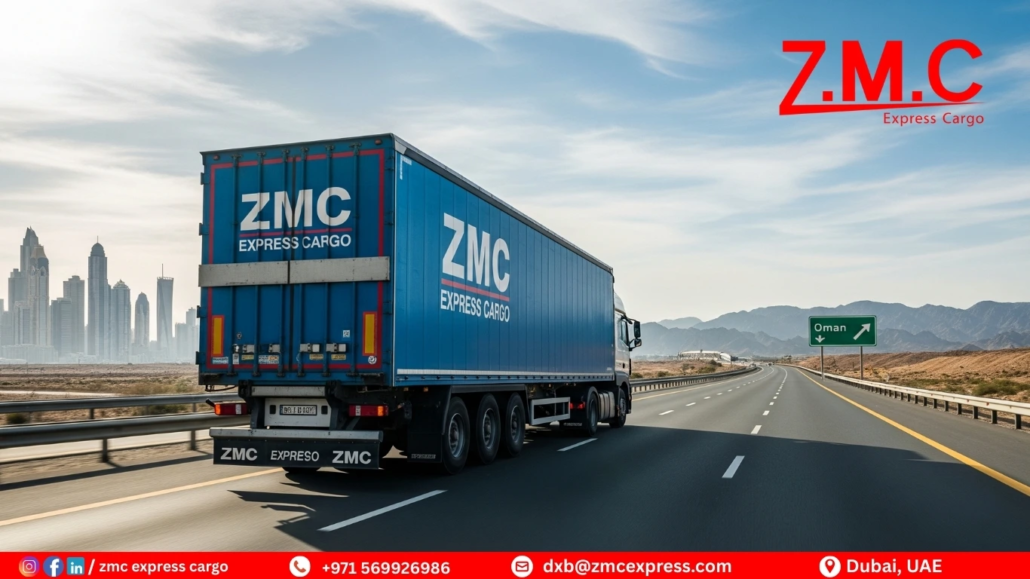
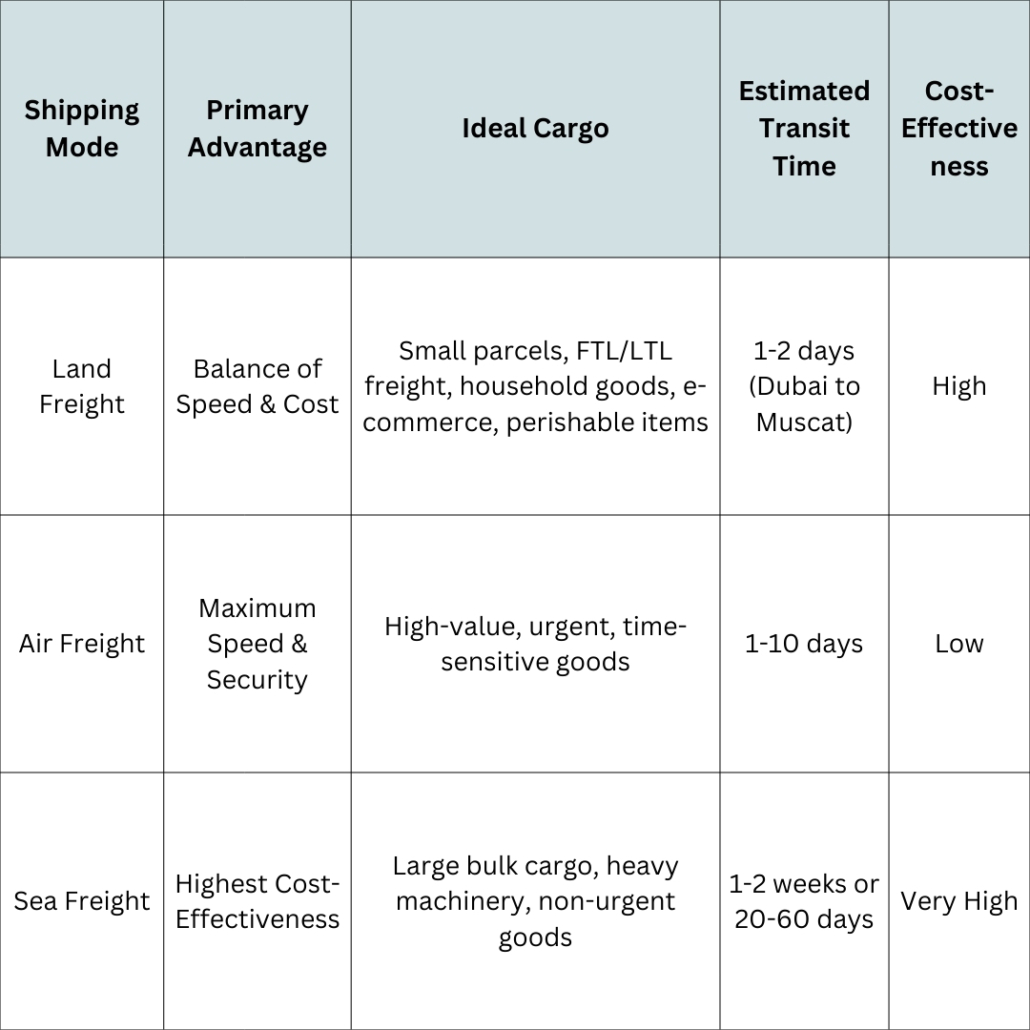
For shipping from Dubai to Oman, land freight is consistently the most strategic and advantageous option for the majority of shipments. It offers an optimal balance of speed, security, and affordability that is unmatched by other transport methods. The direct road links and proximity of the two nations allow for rapid transit, with typical door-to-door times from Dubai to Muscat ranging from just one to two working days. This transit speed is often comparable to air freight for many types of cargo, while being significantly faster than sea freight and far more cost-effective.
The flexibility of land transport is another key benefit. It can accommodate a wide range of cargo types, from small parcels and courier packages to full truckloads of commercial goods or heavy industrial equipment. Freight options are tailored to specific needs, including:
-
Full Truckload (FTL): This service is ideal for large, heavy, or high-value shipments that require the entire truck’s capacity. It provides maximum security and direct delivery from origin to destination without intermediate stops.
-
Less-than-Truckload (LTL): For smaller or medium-sized shipments, this option allows a customer to share truck space and cost with other shippers, making it a highly economical choice.
-
Express Land Cargo: This provides priority handling for urgent deliveries, ensuring the fastest possible road transport for time-sensitive cargo.
This unique blend of attributes places land freight in a “sweet spot” for the UAE-Oman corridor. It offers speed that rivals air freight for a fraction of the cost, while being exponentially faster and more efficient than sea freight for most commercial and personal goods. This operational advantage provides a clear, data-backed rationale for why land transport is the primary choice for most customers, as it means they do not have to compromise on speed, cost, or security.
Air and Sea Freight: Complementary Alternatives
While land freight is the primary choice, air and sea transport remain valuable alternatives for specific types of cargo.
-
Air Freight: Air freight is the premier solution for high-value, time-sensitive goods that must arrive with the utmost speed and reliability. While it is the most expensive option, it offers the fastest transit times, typically ranging from one to ten days. Also we offer air freight from China to Dubai and China to Oman.
-
Sea Freight: Sea freight is the most economical choice for carrying large quantities of goods, such as bulk cargo or heavy machinery. However, this comes with a significant trade-off in speed, with transit times ranging from one to two weeks, and in some cases, up to 60 days.
The following table provides a comparative analysis to help illustrate the strategic trade-offs of each transport mode.
Dubai to oman shipping
Chapter 3: The Seamless Logistics Process
A Step-by-Step Logistics Journey
A streamlined shipping process begins with a clear, customer-centric approach that removes complexity and ensures a smooth journey for the cargo. The process starts with the initial booking, where the customer provides details about their shipment, including weight, size, and destination. Following this, a dedicated team handles the pickup and all necessary documentation. The goods are then transported via the chosen method. The journey culminates with customs clearance at the Oman border and safe, final delivery to the recipient’s location. At every stage, a reliable partner provides real-time updates for full visibility and control.
The Power of the Door-to-Door Model
The most effective logistics model for the UAE-Oman corridor is the door-to-door service. This approach places all responsibility on a single provider, who manages the entire journey from the moment of pickup to the final delivery at the recipient’s doorstep. This model offers unparalleled convenience and peace of mind by eliminating the need for the customer to coordinate with multiple parties, such as local couriers, freight forwarders, and customs brokers. The comprehensive nature of this service, which includes pickup, documentation, customs clearance, and delivery, ensures a hassle-free experience for both businesses and individuals.
An advanced form of this service is found in the “buy-for-me” and shipping solutions, which are particularly relevant for cross-border e-commerce. This service addresses a specific and common customer pain point: the inability of many UAE-based online stores to ship to Oman. By providing a UAE delivery address, a logistics partner becomes more than a simple cargo company; it becomes a physical bridge that allows Omani customers to access the entire UAE e-commerce ecosystem. This demonstrates a forward-thinking, market-responsive approach that transforms a traditional freight service into a strategic enabler of cross-border retail and consumer access.
Chapter 4: The Customs and Regulations Masterclass
Required Documentation for a Hassle-Free Journey
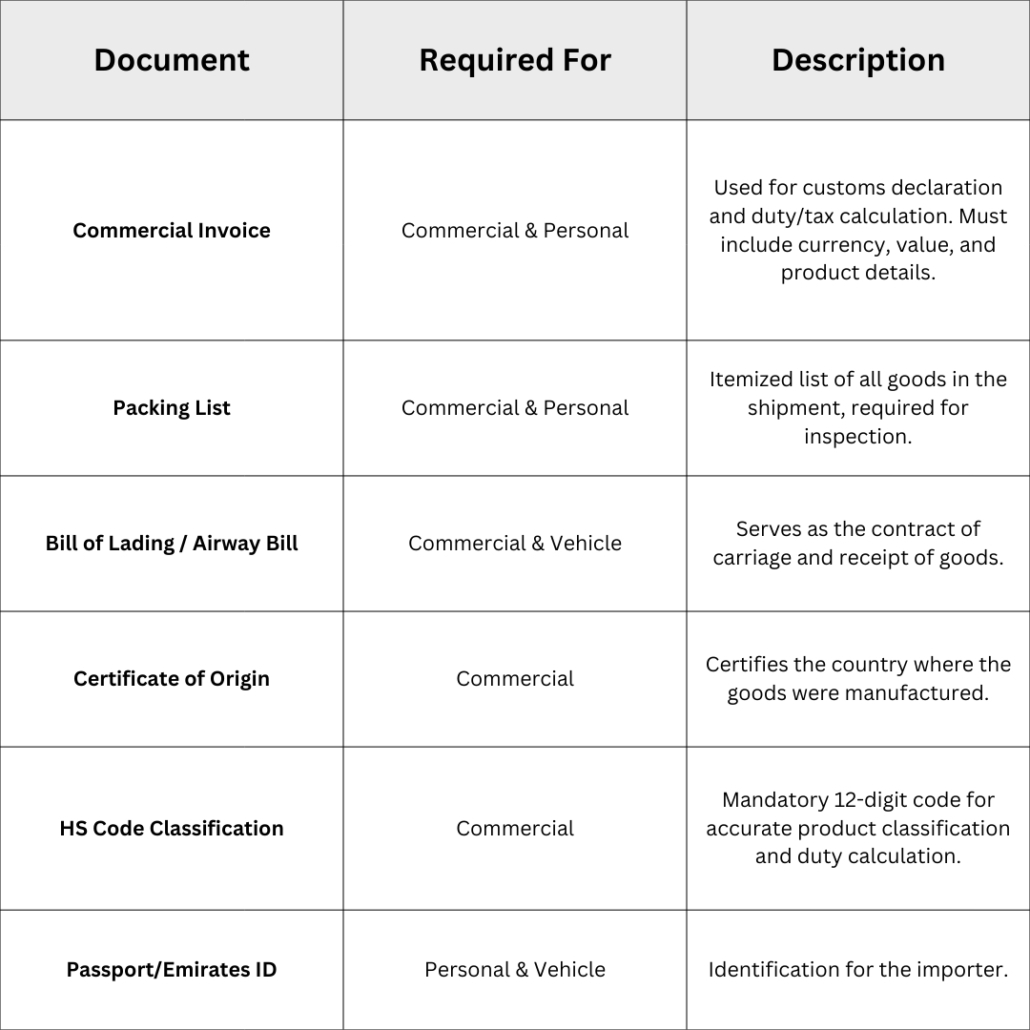
Navigating the customs process requires meticulous attention to detail and a complete set of documentation. For commercial shipments, the required documents include:
-
Commercial Invoices and Packing Lists: Essential for customs declaration and assessment of duties and taxes. The invoice must include the currency, unit value, and number of units sold.
-
Certificate of Origin: Confirms the country of manufacture and is often required for trade agreements.
-
Bill of Lading or Airway Bill: Serves as the shipping contract and receipt for the goods.
-
HS Code Classification: The Harmonized System code is used to classify goods and determine applicable duties and taxes.
For personal effects and household goods, the documentation is generally simpler. The importer must provide a copy of their passport or Emirates ID and a list of the imported goods. Importantly, personal-use goods are typically duty-exempt upon inspection by customs officers. However, if the goods are new or in commercial quantities, a 5% customs duty may be levied.
Mastering the New GCC Integrated Customs Tariff
The shift to the new 12-digit HS code system is a significant factor in customs clearance. It is now mandatory that the correct 12-digit code is included on the commercial invoice for all shipments to countries that have implemented the change, including Oman. Failure to use the new code can result in a default 5% duty and, more critically, lead to clearance delays and potential return of shipments. In a dynamic market like the GCC, regulations are not static. The recent implementation of the new tariff and the potential for new duties mean that a logistics partner must be constantly vigilant and proactive. This requires more than a single-time check; it necessitates real-time regulatory vigilance. A logistics partner with deep expertise in cross-border procedures is uniquely positioned to handle this complexity, meticulously managing documentation and ensuring compliance to prevent the issues that cause delays.
Navigating Prohibited and Restricted Items
Certain goods are prohibited or restricted from entering Oman and require special permits from the relevant authorities. Common restricted items include:
-
Pharmaceuticals and Food: Require health and sanitary-phytosanitary (SPS) certificates and prior permission from the Ministry of Agriculture and Fisheries. Halal certificates are required for meat and meat products.
-
Live Animals: Require a health certificate and an import permit.
-
Cosmetics and Personal Care Products: Require a conformity certificate from a third-party agency.
Prohibited items that are illegal to import include drugs, weapons, fireworks, and counterfeit goods. All imported media is subject to review for censorship and morally or politically sensitive material may be rejected.
Chapter 5: Tailored Solutions for Specialized Cargo
Shipping Household Goods and Personal Effects
Relocating from the UAE to Oman involves more than just transporting items; it is a complex process of moving an entire household. A professional relocation service offers end-to-end solutions that cover logistics planning, specialized packing, and customs coordination. Services can include room-by-room packing, inventory management, and load optimization to ensure safe and efficient handling of all items, from furniture to fragile goods. As previously mentioned, household goods and personal effects that have been owned and used for at least six months are generally duty-free upon arrival in Oman.
Transporting Vehicles: Regulations, Documentation, and the MAKASA Report
Transporting a vehicle from the UAE to Oman is subject to specific regulations and documentation requirements. Private passenger vehicles must be less than seven years old from their date of manufacture, while trucks and buses have an age limit of ten years and heavy equipment has a limit of fifteen years. All imported vehicles must pass a technical inspection upon arrival to ensure they meet Omani safety and emissions standards.
Key documents required for vehicle transport include the commercial invoice and the UAE Export Declaration. A particularly valuable document is the Statistical Report, known as a MAKASA report. This specific UAE customs document proves that the vehicle is a first-time foreign import and is for personal use. Obtaining this report is not just an administrative step; it has a direct, significant financial impact. An importer who secures a MAKASA report is exempted from paying the 5% customs duty in Oman. For a vehicle with a declared value of AED 70,000, this report can save approximately AED 3,500 in customs duty, demonstrating an unparalleled level of logistical expertise and providing immediate, tangible value to the customer.
Business-Specific Logistics Solutions
Specialized logistics solutions are critical for businesses operating across various sectors. The needs of a retail company differ greatly from those of an oil and gas firm, and a logistics partner must have the flexibility to cater to these diverse requirements.
-
Retail & E-commerce: Solutions include the transport of fashion, electronics, and home goods, with an emphasis on services like consolidation and “buy-for-me” to support cross-border retail.
-
Oil & Gas and Construction: These industries require the specialized handling of heavy machinery, industrial equipment, and project materials.
-
Healthcare & Pharma: The transport of temperature-sensitive products like pharmaceuticals and food necessitates the use of refrigerated vehicles to maintain a secure cold chain.
Chapter 6: Anticipating and Mitigating Challenges
Addressing the Root Cause of Delays
While the UAE-Oman route is relatively straightforward, challenges such as customs bottlenecks, regulatory differences, and documentation errors can still cause delays. A logistics partner must be prepared to address not just the symptoms but the root cause of these issues. A delay at the border, for example, is not merely due to a busy crossing; it is often the direct result of incorrect paperwork, duty miscalculations, or a lack of awareness of GCC trade regulations.
A logistics expert can promise more than just a fast service; it can promise to solve the underlying problems that lead to delays in the first place. This is achieved through meticulous documentation management, accurate HS code classification, and proactive communication with customs officials. This approach shifts the service model from reactive to proactive, ensuring a high level of trust and operational excellence.
Chapter 7: Why ZMC Express Cargo is Your Definitive Partner
The logistics corridor between the UAE and Oman is a vital, high-volume route that requires a specific set of skills to navigate successfully. ZMC Express Cargo has a proven track record of excellence in this domain, specializing in the land freight solutions that are uniquely suited for this geographical nexus. The company’s core value proposition is centered on providing a hassle-free, door-to-door service that manages every aspect of the shipping journey—from pickup and documentation to customs clearance and final delivery.
The ZMC Express difference is defined by several key competitive advantages. The company leverages the strategic geographical proximity of the UAE and Oman to offer unmatched speed and efficiency. Its team of experts has a deep, real-time understanding of complex regulations, including the intricacies of the new GCC Integrated Customs Tariff, which is essential to prevent costly delays. Moreover, innovative and customer-centric services like “buy-for-me” solutions demonstrate a forward-thinking approach that caters directly to the evolving needs of the market.
The seamless journey, from flexible FTL and LTL options to the meticulous handling of specialized cargo, is supported by a robust real-time tracking system that provides full visibility and control to the customer. This comprehensive, expertly managed service model positions ZMC Express Cargo as more than a service provider; it is a definitive partner in ensuring the seamless, secure, and cost-effective transport of goods across the UAE-Oman border.
For a strategic, expert, and transparent shipping experience, a comprehensive consultation is recommended. Contact ZMC Express Cargo to request a detailed quote and discover a logistics solution tailored to your specific needs. Visit www.zmcexpress.com to learn more about the complete range of services.